
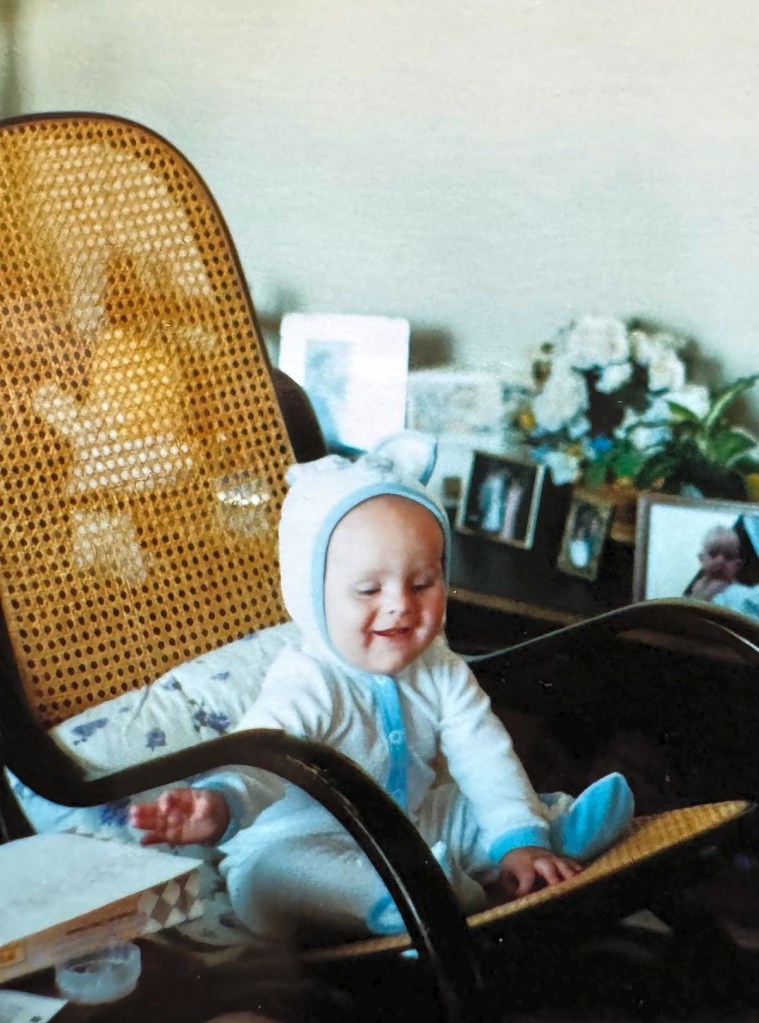
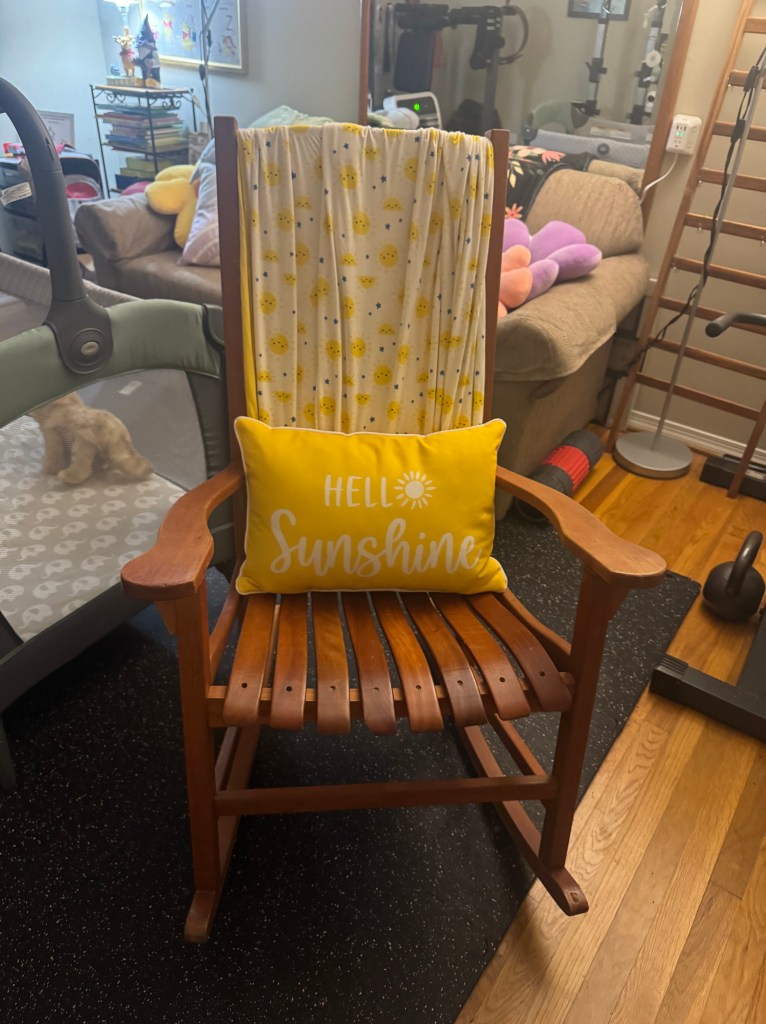
The other night, I was rocking my sweet little granddaughter Winifred in our rocking chair when I suddenly drifted back 36 years, to another baby and another rocking chair.
I think I became a mother in that rocking chair.
As long as I can remember, I knew I wanted to be a mother, which is somewhat surprising considering the example I had. My own mother was often angry and cruel, and when I was eight, she left, leaving behind a sad and confused little girl.
When I found out I was pregnant with Joshua, I was happy and excited. But as my due date drew closer, excitement began sharing space with fear. How did I know what kind of mother I would be? Would I somehow follow my own mother’s path and create a child who felt scared and unloved?
Joshua’s birth was tough, but he was the most beautiful baby I had ever seen. I loved him instantly. Still, that nagging fear didn’t completely disappear.
And then he turned out to be a colicky baby.
Most evenings were spent with Rich and me taking turns holding a screaming baby until he finally fell asleep. Soon after we arrived at Fort Bragg, when Joshua was a little over a month old, we bought a secondhand rocking chair. After that, I spent countless evenings in that chair, rocking him to sleep.
When Joshua was five months old, Rich was deployed for Operation Desert Shield. Suddenly, Joshua and I were on our own for the next seven months.
Those early days were filled with fear for Rich and plenty of uncertainty about whether I could handle everything on my own. But night after night, Joshua and I fell into a routine. The colic eventually disappeared. And somewhere along the way, something in me changed.
I realized I could do this.
I might not be a perfect mother, but I loved that sweet little baby desperately. Joshua and I were a team. In a lot of ways, I think we grew up together.
I rocked him to sleep almost every night until he was about nine months old. Then, for some reason I no longer remember, I decided it was probably time for him to learn to fall asleep on his own. I mentally prepared myself for crying and a long struggle.
Instead, I laid him down, and he went right to sleep.
Of course he did.
I walked back into the living room and sat down in that rocking chair by myself. As I rocked, with my beautiful baby boy sleeping peacefully in the next room, I remember realizing something.
I was a mother.
And I was a pretty good one at that.
Almost four years later, Courtney came along. I was a different mother by then—not because I had everything figured out, but because I trusted myself in a way I hadn’t when Joshua was born. That fear that I was somehow destined to become the kind of mother I had known had faded.
Was I a perfect mother? God, no.
I made mistakes. I’m sure there are things both of my children could tell you they wish I had done differently. But there is one thing I believe with my whole heart: Joshua and Courtney have always known how deeply they are loved.
And maybe that was what the scared little eight-year-old inside me had wanted all along.
So, 36 years later, there I was in another rocking chair, this time holding Joshua’s baby girl.
As I sat there rocking Winny, I thought about that scared 22-year-old in the secondhand rocking chair. Back then, when I was in the thick of it and trying so hard to be the mother my baby needed, I don’t remember ever looking ahead to a moment like this.
I wish I could tell that young mother that she was going to be okay.
That she wasn’t destined to repeat the past.
That the little boy sleeping in the next room would grow up knowing exactly how much he was loved. That another beautiful baby would come along a few years later and teach her even more about being a mother. And that 36 years later, she would hold her son’s baby girl in her arms and realize just how far they had all come.
I became a mother in that first rocking chair.
But sitting there rocking Winny all these years later, I think I finally understood just how much becoming Joshua’s mother—and later Courtney’s—had changed me, too.


 Coach Kareen