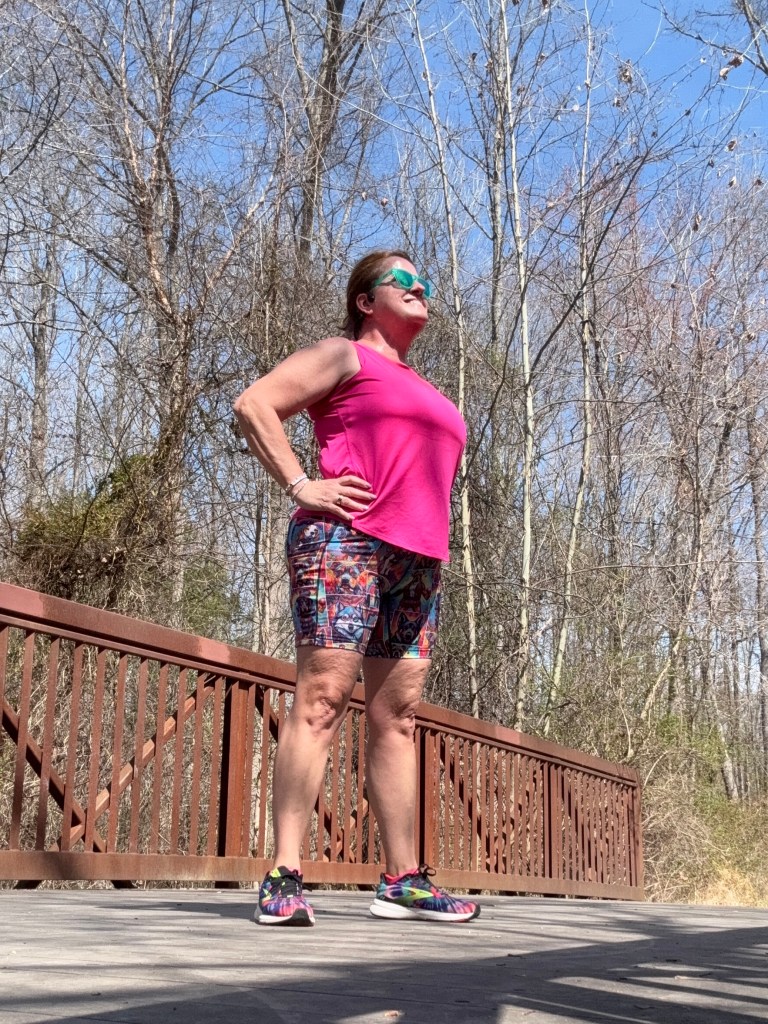
I often get asked how I got started running, so I thought I’d share my story.
Technically, my running journey began in the late ’80s at Benton Jr./Sr. High School. Every spring, my best friend Jill and I would decide to run the 5K that was part of our annual field day. Each year we confidently declared that we were going to train for it… and each year, that never happened.
We would line up anyway and spend most of the race jogging just ahead of the truck that followed behind to pick up the stragglers.
We always finished—but we paid for it. For the better part of a week afterward, we’d walk around sore and wondering why we had done that to ourselves. Back then, running was something you survived, not something you loved.
Fast forward to the spring of 2002. I had been doing Weight Watchers for nearly nine months but couldn’t lose the last five pounds to reach my goal. After yet another frustrating weigh-in, I went home determined to try something different.
I decided to start running.
The path near my house was marked in tenths of a mile, so I ran one-tenth of a mile… and then walked until I could breathe again. I repeated that over and over. Slowly, I built up the distance until I could run the full 1.5-mile loop without walking. Then I kept going. Before long, I was regularly running as much as ten miles at a time.
Eventually, injury and surgery sidelined me, and I stepped away from running for a few years.
In 2011, as I faced the reality of an empty nest, I realized I needed something that was just mine. I returned to running and signed up for a 5K on January 1, 2012—my first official race. For a while, I ran mostly on my own. Then, in September of 2012, I joined a local training program.
That decision changed my life.
I found a community of supportive, motivating people who challenged me and helped me believe I was capable of more than I ever imagined.
And somewhere along the way, running stopped being just something I did for myself. I realized I wanted to help other people discover what movement could do for them, too.
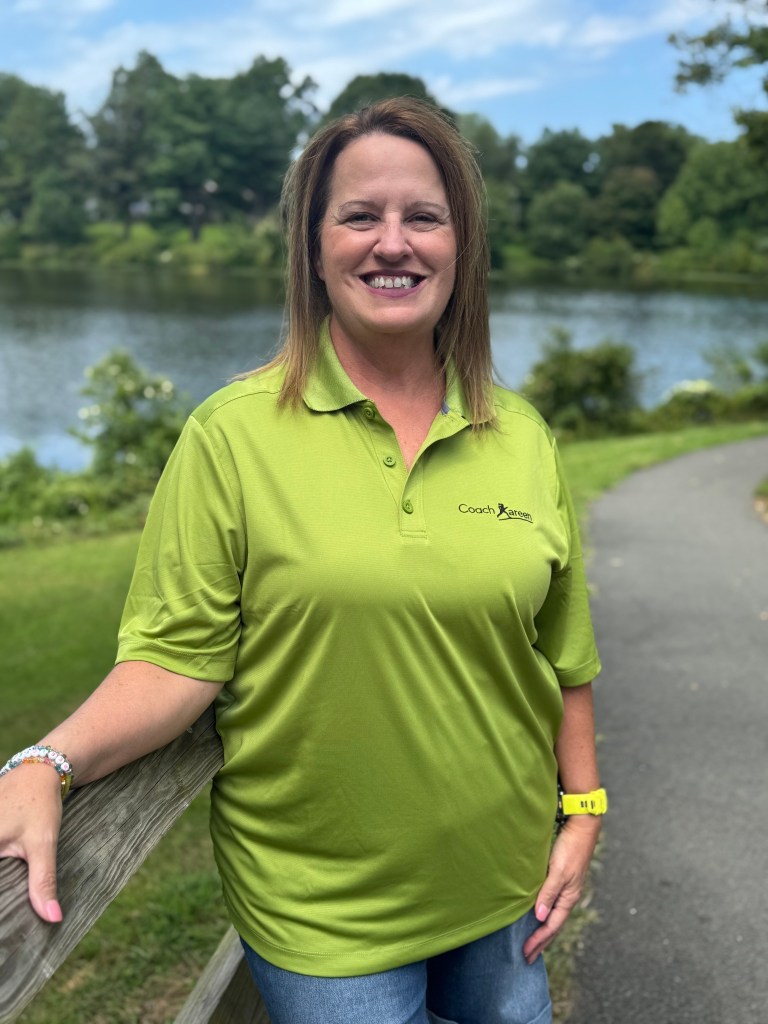
In February of 2014, I earned my RRCA coaching certification, and the following month I began coaching with RunFit Kidz, helping kids learn that running and movement could be fun, empowering, and something they could carry with them for life. I also began coaching adults that year.
This September, I’m beginning my 13th year of coaching adults, and I’ve now been coaching RunFit Kidz for more than 12 years. In May 2024, I became the Director of RunFit Kidz, giving me the opportunity to help shape a program that introduces hundreds of young athletes to running, healthy habits, confidence, and the joy of movement.
Since joining that first training group in 2012, I’ve completed more than 200 races, including nine marathons. But these days, I don’t define myself—or fitness—only by miles and finish lines.
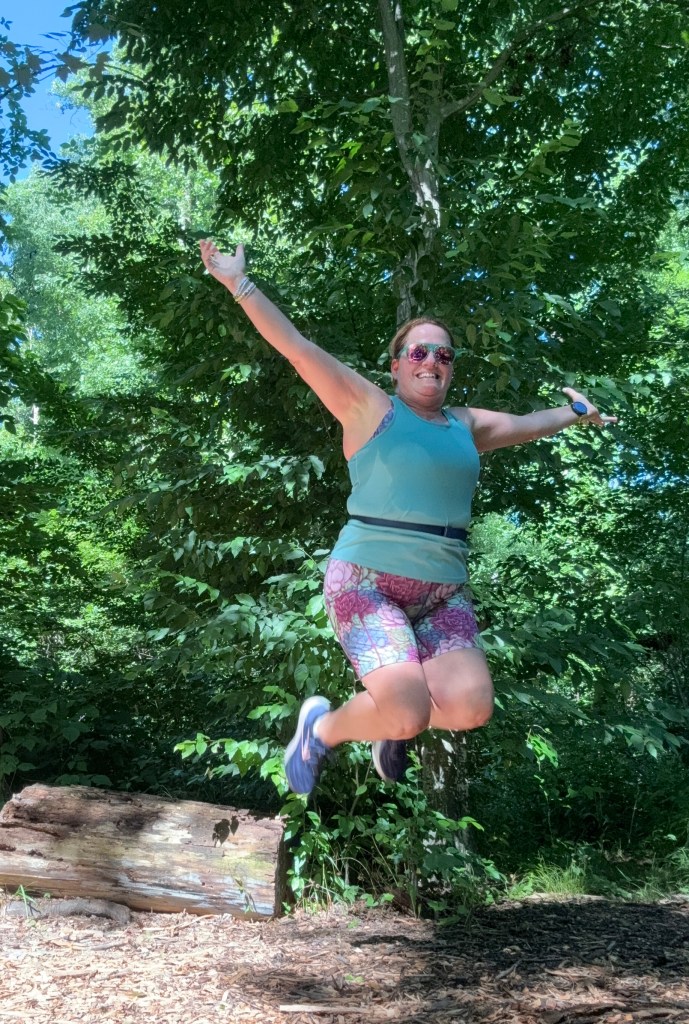
I strength train. I hike. I walk. I run. I coach. I keep learning. And I believe more than ever that movement should support the life we want to live, not become another way to judge ourselves.
I’ve also learned firsthand that our relationship with fitness changes as we do. I’ve moved through injuries, setbacks, menopause, celebrations, disappointments, comebacks, and now life as a grandmother—Ree. I’m stronger in some ways than I was 20 years ago and still working on others. I think that’s exactly how it’s supposed to be.
And now I’m stepping into another new chapter.
Along with a group of incredible women, I’m helping build Fuel Your Fire, a women’s wellness community created to connect women with information, resources, practitioners, and—maybe most importantly—each other. It feels like a natural extension of everything I’ve learned through coaching: wellness is about so much more than exercise, and none of us should have to figure it all out alone.
When I look back, it still makes me laugh that all of this started because I wanted to lose five stubborn pounds.
Running gave me confidence when I needed it, community when I was searching for connection, and purpose when I wasn’t sure what came next. Coaching gave me the chance to pass those things along to someone else.
And over the years, my definition of wellness has gotten a whole lot bigger.
It’s running and strength training and hiking. It’s taking care of our bodies while still enjoying our lives. It’s finding people who make us better. It’s trying new things, starting over when we need to, and refusing to believe there’s an age when we’re supposed to stop setting goals for ourselves.
I’m still a runner.
But I’m also a coach, a strength-training enthusiast, a hiker, a community builder, a business owner, a wife, a mom, and Ree.
And the best part?
I’m still not done.