Redefining the Numbers That Matter

I was in my early 30s the first time I really worried about the number on the scale.

I had just come through a difficult period of depression—the year I turned 29—and had gained a significant amount of weight. Once the depression was under control, my focus shifted to the weight, because that is what I was told by the doctors to focus on.

Eventually, the weight came off. And that’s when my relationship with the scale really began.

For years after that, the number on the scale had the power to make or break my mood. Even when I gained weight, I could usually lose it again. But then perimenopause and menopause hit—and things changed. What had always felt manageable suddenly didn’t.

For a while, I kept weighing myself, and that number continued to shape how I felt about myself… and, if I’m being honest, how I showed up in the world.

At some point, I stopped stepping on the scale altogether. And that worked—for a little while. But the truth was, I still didn’t feel comfortable in my own skin.

Recently, I found my way back to strength training after a few years away. And something shifted.

I started to realize that the number on the scale isn’t what matters most to me anymore.

What matters is feeling strong. Capable. Powerful.

Today, I deadlifted 165 pounds and bench pressed 65 pounds. These aren’t my personal bests—but they feel like something even better: progress. Momentum. A return to myself.

Of course, I know there are other numbers that matter—blood pressure, cholesterol, blood sugar. Those are important pieces of the bigger picture.

But the number on the scale? That’s no longer the one I look to for a true measure of my health.

These days, I want to lift heavy barbells.

And more importantly, I want to be able to scoop up my granddaughter when she asks, lift her high in the air, swing her around—and hear those giggles.

The scale may still exist.

But it no longer gets a vote.

.

Learning to Start Again Without Motivation

The worst of perimenopause and menopause hit me right around the time the world shut down in 2020. Looking back, it was the perfect storm. Overnight, routines disappeared, uncertainty took over, and many of the habits I’d built and relied on for years slowly unraveled. Things that once felt automatic – movement, structure, self-care – suddenly felt heavy and optional.

Even now, years later, and despite feeling so much better physically, and mentally, I have struggled to fully return to those healthy habits. I kept telling myself that once the motivation came back, everything else would fall into place. But the truth is, the motivation just hasn’t shown up the way I expected it to. 

What I finally realized is that for where I am right now, discipline has to come first. Motivation can’t be the prerequisite anymore – it must be the result. I’m trusting that as I show up consistently, as I begin to see progress and feel more like myself again, the motivation will follow.

There’s a reason Nikes “Just Do It” campaign has stood the test of time. It’s simple, honest, and uncomfortable in the best way. Sometimes you don’t feel ready. Sometimes you don’t feel inspired. But you do it anyway.

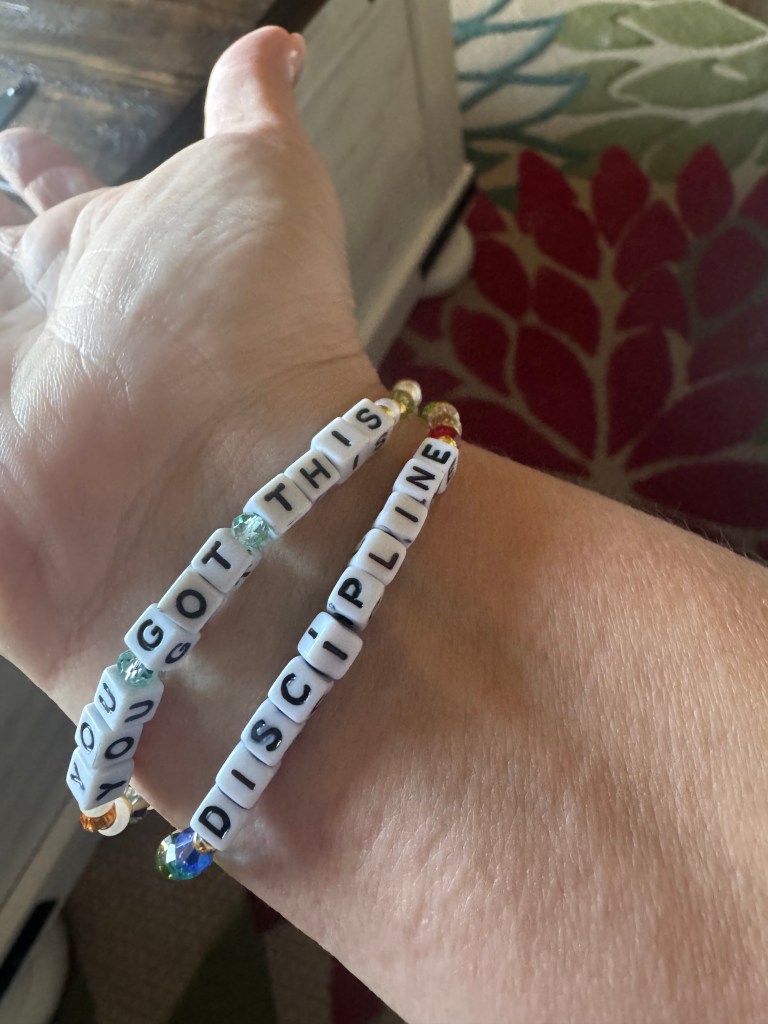
I’m no longer allowing myself to sit around, waiting for motivation to magically appear, because experience has taught me that it doesn’t work that way for me. Instead, I’m choosing discipline – small, intentional actions done consistently, even on the days I don’t feel like it. To help keep that commitment front and center, I’ve  given myself a small physical reminder: something I wear on my wrist as a cue to follow through. 

This season isn’t about perfection or pushing too hard. It’s about rebuilding trust with myself, one disciplined choice at a time, and believing that motivation will meet me along the way.

Why I Strike a Superhero Pose on My Long Runs

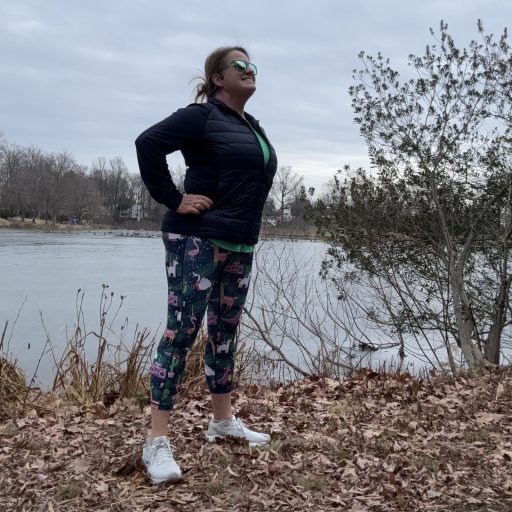
At some point during most of my long runs, I stop, turn toward my phone, and strike what I lovingly call my superhero pose—hands on hips, chest lifted, standing tall. Sometimes I’m sweaty. Sometimes I’m tired. Sometimes I’m questioning every life choice that led me to this exact mile.

And every single time, I take the photo anyway.

The idea for this pose didn’t come from a running book or a coach. It actually came from an episode of Grey’s Anatomy. In the scene, one of the characters talks about “power posing”—standing in a confident, expansive posture for a short amount of time to change how you feel. The claim was that holding a superhero-style stance for just two minutes could increase testosterone, lower cortisol, and boost confidence.

Naturally, I was skeptical. Two minutes of standing still doesn’t exactly sound like a magic fix.

So I did what many of us do when something catches our attention: I researched it. And while the science isn’t perfect or unanimous, there is evidence suggesting that posture can influence mindset. Standing tall, taking up space, and opening your body can signal confidence to your brain—even if you don’t feel particularly confident in the moment.

Here’s the thing: I never stand in that pose for two minutes. Sometimes it’s ten seconds. Sometimes it’s just long enough to snap a photo and laugh at myself. But somehow, it still works.

Over time, the superhero pose has become a tradition—my own quiet ritual during long runs. It’s a pause that says, Look at you. You’re doing this. It’s a reminder that showing up matters, even when the run isn’t perfect, even when my body feels different than it used to.

And in the last few years, my body has changed—dramatically. Perimenopause and menopause brought exhaustion, weight gain, brain fog, and a sense of disconnect that I wasn’t prepared for. I didn’t always recognize the runner staring back at me in the mirror. Some days, I still don’t.

There are moments—mid-run, mid-mile, mid-thought—when I ask myself why I keep pushing. Why I keep training. Why I keep lacing up when things feel harder than they used to.

The answer isn’t about pace or distance or race goals anymore.

I keep going because running helps me feel like me.

The superhero pose is my way of honoring that. It’s not about pretending I’m invincible or strong all the time. It’s about acknowledging resilience. About standing tall in a body that’s changing. About claiming pride in the effort, not just the outcome.

So yes, I’ll keep stopping on my long runs. I’ll keep striking that pose. I’ll keep reminding myself—on tired legs and uncertain days—that strength doesn’t disappear just because things change.

Sometimes, strength looks like simply showing up… and standing tall long enough to remember who you are.