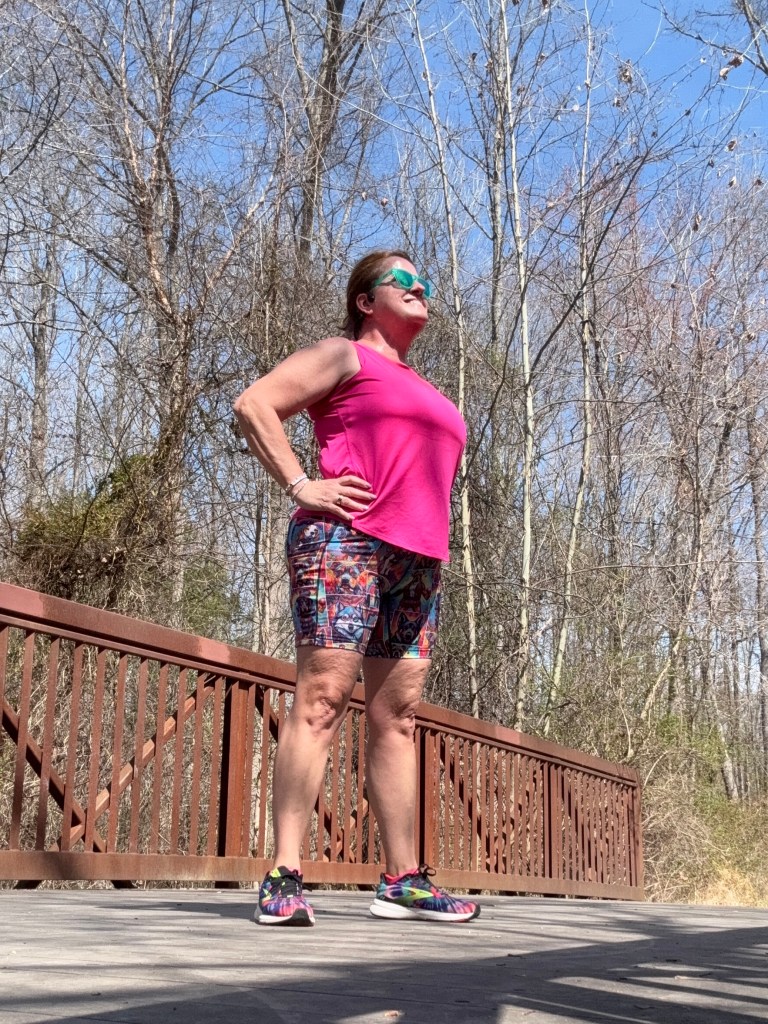
Friday marked the end of my fourth month on tirzepatide, and it brought up a lot of feelings about this particular tool I chose to try.
Let’s start with the numbers.
Month 1: down 0.8 lbs Month 2: down 2.2 lbs Month 3: down 2.3 lbs Month 4: down 0.6 lbs
That’s 5.9 pounds in four months.
For some perspective, in the three months before starting a GLP-1, I lost 5.4 pounds simply by adding two days of strength training to the fitness routine I was already doing.
And that comparison has definitely made me think.
I’m currently on the highest dose I’ve taken, and the jump to this dose has brought some pretty noticeable side effects—unfortunately, increased weight loss hasn’t been one of them.
The biggest issue this month has been fatigue. It’s made it harder to work out at the intensity I normally would, and I’ve been feeling unusually weak during my runs. I’ve also started experiencing some lightheadedness during workouts and runs, which has concerned me.
Then came this morning.
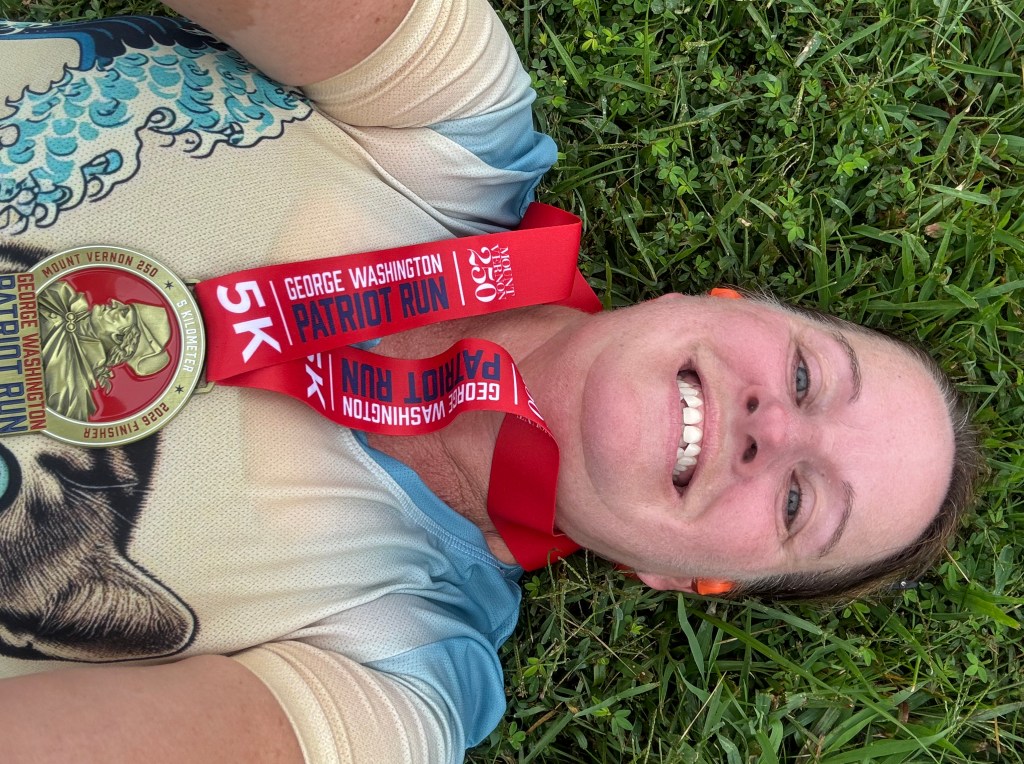
During my 5K, I had pretty significant dizziness and lightheadedness, some vision issues, nausea, and a heart rate that climbed much higher than I would normally expect during a race. Both my Garmin and Oura have also been showing an increase in my resting heart rate over the past four or five weeks, so this wasn’t something I wanted to ignore.
After I got home, I checked in with a doctor friend, who felt my symptoms sounded consistent with my blood pressure dropping too low and possibly my blood sugar dropping as well. I’ll also be discussing all of this with my own healthcare provider.
So where does that leave me?
I think it’s time to take a break, talk with my provider, and reassess.
I went into this experiment knowing that tirzepatide was a tool—not a magic solution. I’m still strength training. I’m still running. I’m still paying attention to nutrition and doing the things I know are important for my long-term health.
But a tool also has to be helping more than it’s hurting.
Right now, losing 5.9 pounds over four months while feeling increasingly fatigued, struggling through my runs, and now dealing with dizziness and other symptoms doesn’t feel like a particularly good tradeoff for me.
Maybe I’m simply someone who doesn’t respond particularly well to this medication. Maybe the dose needs to change. Maybe another option would be a better fit. Or maybe this just isn’t the right tool for me.
I don’t know the answer yet—and I’m actually okay with that.
For now, I’m going to listen to my body, have a conversation with my healthcare provider, and figure out what makes the most sense from here.
Four months in, this experiment may not be giving me the results I expected. But figuring out what doesn’t work for my body is information, too.
I often get asked how I got started running, so I thought I’d share my story.
Technically, my running journey began in the late ’80s at Benton Jr./Sr. High School. Every spring, my best friend Jill and I would decide to run the 5K that was part of our annual field day. Each year we confidently declared that we were going to train for it… and each year, that never happened.
We would line up anyway and spend most of the race jogging just ahead of the truck that followed behind to pick up the stragglers.
We always finished—but we paid for it. For the better part of a week afterward, we’d walk around sore and wondering why we had done that to ourselves. Back then, running was something you survived, not something you loved.
Fast forward to the spring of 2002. I had been doing Weight Watchers for nearly nine months but couldn’t lose the last five pounds to reach my goal. After yet another frustrating weigh-in, I went home determined to try something different.
I decided to start running.
The path near my house was marked in tenths of a mile, so I ran one-tenth of a mile… and then walked until I could breathe again. I repeated that over and over. Slowly, I built up the distance until I could run the full 1.5-mile loop without walking. Then I kept going. Before long, I was regularly running as much as ten miles at a time.
Eventually, injury and surgery sidelined me, and I stepped away from running for a few years.
In 2011, as I faced the reality of an empty nest, I realized I needed something that was just mine. I returned to running and signed up for a 5K on January 1, 2012—my first official race. For a while, I ran mostly on my own. Then, in September of 2012, I joined a local training program.
That decision changed my life.
I found a community of supportive, motivating people who challenged me and helped me believe I was capable of more than I ever imagined.
And somewhere along the way, running stopped being just something I did for myself. I realized I wanted to help other people discover what movement could do for them, too.
In February of 2014, I earned my RRCA coaching certification, and the following month I began coaching with RunFit Kidz, helping kids learn that running and movement could be fun, empowering, and something they could carry with them for life. I also began coaching adults that year.
This September, I’m beginning my 13th year of coaching adults, and I’ve now been coaching RunFit Kidz for more than 12 years. In May 2024, I became the Director of RunFit Kidz, giving me the opportunity to help shape a program that introduces hundreds of young athletes to running, healthy habits, confidence, and the joy of movement.
Since joining that first training group in 2012, I’ve completed more than 200 races, including nine marathons. But these days, I don’t define myself—or fitness—only by miles and finish lines.
I strength train. I hike. I walk. I run. I coach. I keep learning. And I believe more than ever that movement should support the life we want to live, not become another way to judge ourselves.
I’ve also learned firsthand that our relationship with fitness changes as we do. I’ve moved through injuries, setbacks, menopause, celebrations, disappointments, comebacks, and now life as a grandmother—Ree. I’m stronger in some ways than I was 20 years ago and still working on others. I think that’s exactly how it’s supposed to be.
And now I’m stepping into another new chapter.
Along with a group of incredible women, I’m helping build Fuel Your Fire, a women’s wellness community created to connect women with information, resources, practitioners, and—maybe most importantly—each other. It feels like a natural extension of everything I’ve learned through coaching: wellness is about so much more than exercise, and none of us should have to figure it all out alone.
When I look back, it still makes me laugh that all of this started because I wanted to lose five stubborn pounds.
Running gave me confidence when I needed it, community when I was searching for connection, and purpose when I wasn’t sure what came next. Coaching gave me the chance to pass those things along to someone else.
And over the years, my definition of wellness has gotten a whole lot bigger.
It’s running and strength training and hiking. It’s taking care of our bodies while still enjoying our lives. It’s finding people who make us better. It’s trying new things, starting over when we need to, and refusing to believe there’s an age when we’re supposed to stop setting goals for ourselves.
I’m still a runner.
But I’m also a coach, a strength-training enthusiast, a hiker, a community builder, a business owner, a wife, a mom, and Ree.
I’m officially 12 weeks into my tirzepatide journey.
Since starting in May, I’ve lost 6 pounds. And since I really started paying attention to my weight again when I recommitted to strength training in May, I’m down 11.8 pounds total.
Would I have expected that number to be a little bigger by now? Yep. But I’m choosing to be happy with the progress instead of letting the scale decide whether or not what I’m doing is working.
Because there are some other numbers that matter too.
I’ve taken a full minute off my mile time over the last couple of months.
I’m steadily lifting heavier and getting stronger week after week.
And maybe the biggest shift: I’m starting to care less about what number I see on the scale and more about being able to see the muscles I’ve been working so hard to build.
I know there may be people who hear me say that and think, Of course the scale doesn’t matter to her right now—it’s not moving very fast. Wait until she loses a bunch of weight and suddenly it will matter again.
I understand why someone might think that. But I also know that isn’t where this is coming from.
My relationship with the scale has been changing for a long time. I simply got tired of battling my body based on one number. Tired of letting a number in the morning determine whether I felt successful or frustrated. Tired of overlooking all the things my body was accomplishing because the scale hadn’t given me the validation I thought I needed.
That doesn’t mean I don’t want to lose weight. I do. I want to lose body fat, and I know some of that will likely show up on the scale. And when it does, I’ll absolutely be happy about it.
But I don’t want that happiness to erase everything else.
I want to be stronger. I want to run faster. I want to see the muscles I’ve worked hard to build. I want my clothes to fit differently. I want to feel good in my body.
Less fat. More muscle. More strength. More speed.
The scale can be one measure of my progress.
I’m just not willing to let it be the measure anymore.
When most people think about running, they think about physical fitness. Stronger legs. Better endurance. Faster times.
As a running coach who works with both adults and children, I’ve learned that many running struggles have very little to do with fitness and a whole lot to do with what’s happening between our ears.
This is especially true for the adults I coach. Most are over 40 and bring decades of life experience to the starting line. They are balancing careers, raising children, caring for aging parents, managing households, and trying to carve out time for themselves. Their challenges often aren’t about whether they’re capable of running the miles. The challenge is managing the mental side of the sport.
The Mental Roadblocks
One of the biggest mental challenges runners face is comparison.
Maybe you have a running buddy who is naturally faster than you. Every run feels like a struggle to keep up. Instead of enjoying the miles, you’re constantly worried about falling behind.
Or perhaps your running partner brings a steady stream of negativity to every workout. The weather is too hot. The route is boring. The run is too long. The pace is too hard.
Whether we realize it or not, the people we spend our miles with can have a significant impact on our mindset. Running partners should challenge us, but they should also support us. If every run leaves you feeling defeated, it may be time to evaluate whether your running partnership is helping or hurting your progress.
Another common obstacle is unrealistic expectations.
Many runners remember what they could do ten, twenty, or even thirty years ago. They compare today’s body to the body they had when they were younger, recovering faster, sleeping more, and dedicating significantly more time to training.
The reality is that most adult runners are juggling far more responsibilities than they did in their twenties. They have careers, families, community commitments, and countless other demands on their time and energy.
The goal isn’t to train like your younger self. The goal is to train like the version of you that exists today.
That may mean adjusting expectations, extending training timelines, or redefining what success looks like. It may also mean taking an honest look at your goals and asking yourself whether they are realistic based on the time and energy you currently have available.
The Ghost of the Athlete You Used to Be
Sometimes our mental struggles during a run aren’t about the run at all. They’re about how we see ourselves.
Many runners are coming back from something—an injury, an illness, menopause, a major life event, or simply a long break from the sport. Yet when they lace up their shoes, they expect themselves to perform like the athlete they were years ago.
Sometimes we’re haunted by the ghost of our past athlete.
We remember the pace we used to run. The distances that felt easy. The races we completed. The version of ourselves that seemed stronger, faster, or more capable.
The problem is that we’re comparing today’s runner to yesterday’s runner.
It’s important to meet yourself where you are right now.
That doesn’t mean you should give up on your goals or stop believing in what’s possible. Many runners successfully return from setbacks and accomplish incredible things. But the path forward begins with accepting your current reality.
Give yourself grace.
Start from your current fitness, not from your memories.
Celebrate the small wins. Trust the process. Allow yourself the time needed to rebuild.
Your past athlete isn’t the enemy. That version of you proved what you’re capable of. But today’s athlete deserves the same respect, patience, and encouragement that you would give to any runner standing at the beginning of a new journey.
Building Mental Strength
The good news is that mental skills can be trained just like physical ones.
One of my favorite tools is having a mantra ready before you need it.
When a run gets difficult, your brain will start offering opinions. Not all of them are helpful.
A simple phrase such as:
One step at a time.
Strong and steady.
I can do hard things.
Forward is forward.
can help redirect your focus and quiet the negative chatter.
Music can be another powerful tool. Consider creating a playlist that you reserve only for the toughest parts of your runs. When your favorite songs appear at exactly the moment you need them, they can provide a surprising boost.
If you’re in a long training cycle, look for ways to break up the journey. A tune-up race can provide a fresh goal, a confidence boost, and an opportunity to celebrate progress before your primary event.
Most importantly, surround yourself with people who support what you’re trying to accomplish.
Sometimes the people who love us most don’t fully understand why we’re waking up before dawn to run long distances or spending months preparing for a race. That’s okay. Seek out fellow runners who understand the process and can remind you why you started when motivation begins to fade.
Finding Joy Along the Way
Not every run needs to be about pace, distance, or performance.
Sometimes the best thing you can do is give yourself something small to look forward to.
On a long run, I often encourage runners to find a way to break up the miles. Maybe that means running to the next mailbox, the next water stop, or the next mile marker. Sometimes it means challenging yourself to take one photo of something interesting, beautiful, or unexpected along the route.
These small mental breaks can shift your focus away from how much farther you have to go and help you stay present in the moment.
Running doesn’t have to be an endless pursuit of faster times. It can also be an opportunity to explore, reflect, connect, and appreciate.
The Finish Line
The longer I coach, the more convinced I become that running is as much a mental sport as a physical one.
Our thoughts can build us up or tear us down. They can help us persevere through challenges or convince us to quit before we’ve even given ourselves a chance.
The next time a run feels difficult, take a moment to ask yourself an important question:
Is my body struggling right now, or is it my mind?
The answer might surprise you.
And once you learn to train both, you’ll discover that you’re capable of far more than you ever imagined.
I’m currently in the middle of week five of my GLP-1 journey. This past Friday, I took my fifth injection and had my first dosage increase. The dose doubled from what I had been taking during the first four weeks.
So far, I’ve been fortunate not to experience any significant negative side effects. I have noticed that I simply don’t feel like eating very often. Because of that, I’m making a conscious effort to ensure I’m getting enough nutrition each day. My focus continues to be on protein, fiber, and plenty of water to support both my overall health and my active lifestyle.
If we’re looking strictly at the scale, there isn’t much to report. During the first month, I’ve essentially lost and regained the same two to three pounds. Surprisingly, that doesn’t bother me nearly as much as it might have in the past because weight loss isn’t my primary goal in this journey.
For the past two years, I’ve been taking a statin to help lower my cholesterol. Unfortunately, I’m one of the people who experiences muscle soreness as a side effect. Most days, the discomfort sits somewhere between a four and a five on the pain scale. While that’s manageable, dealing with it day after day for two years has become exhausting—especially for someone who enjoys running, strength training, and staying active.
My hope is that improving my health markers through the GLP-1 will eventually allow me to reduce or even eliminate my need for the statin. That possibility is one of the biggest reasons I decided to pursue this path.
While the scale hasn’t changed much, I have noticed some encouraging signs. A few shirts that had become a little snug are fitting more comfortably again. Changes like that remind me that progress isn’t always reflected in a number. Of course, I also give a lot of credit to the time and effort I’m putting in at the gym. Strength training remains an important part of this process, and I’m committed to maintaining as much muscle as possible along the way.
As always, I’m grateful for everyone who has shared their own experiences with weight loss medications and for those who have supported my decision to try a GLP-1. Hearing your stories, advice, and encouragement has made this journey feel much less lonely.
I’m committed to continuing to share both the successes and the challenges as they come. My goal is to be transparent about what this experience is really like, because I know there are many others who are trying to make informed decisions about their own health. Every journey is different, but sometimes it helps simply to know that you’re not walking the path alone.
I was in my early 30s the first time I really worried about the number on the scale.
I had just come through a difficult period of depression—the year I turned 29—and had gained a significant amount of weight. Once the depression was under control, my focus shifted to the weight, because that is what I was told by the doctors to focus on.
Eventually, the weight came off. And that’s when my relationship with the scale really began.
For years after that, the number on the scale had the power to make or break my mood. Even when I gained weight, I could usually lose it again. But then perimenopause and menopause hit—and things changed. What had always felt manageable suddenly didn’t.
For a while, I kept weighing myself, and that number continued to shape how I felt about myself… and, if I’m being honest, how I showed up in the world.
At some point, I stopped stepping on the scale altogether. And that worked—for a little while. But the truth was, I still didn’t feel comfortable in my own skin.
Recently, I found my way back to strength training after a few years away. And something shifted.
I started to realize that the number on the scale isn’t what matters most to me anymore.
What matters is feeling strong. Capable. Powerful.
Today, I deadlifted 165 pounds and bench pressed 65 pounds. These aren’t my personal bests—but they feel like something even better: progress. Momentum. A return to myself.
Of course, I know there are other numbers that matter—blood pressure, cholesterol, blood sugar. Those are important pieces of the bigger picture.
But the number on the scale? That’s no longer the one I look to for a true measure of my health.
These days, I want to lift heavy barbells.
And more importantly, I want to be able to scoop up my granddaughter when she asks, lift her high in the air, swing her around—and hear those giggles.
It was a simple comment. Casual. Probably not meant to carry much weight.
But it has stayed with me.
Because the person it was said about… doesn’t run.
She’s strong. She’s fit. She shows up for herself in ways that deserve respect. But running? That’s not her thing.
And yet—that’s what a runner looks like?
I haven’t been able to shake it.
Not because there’s anything wrong with her. But because of what it quietly suggests about me.
Because here’s the truth—I don’t look like what people picture when they think of a runner.
I’m not the image you see in ads or magazines. I don’t fit the mold that so many people have been taught to associate with speed, endurance, or strength.
And yet…
I’ve run over 200 races. Nine marathons. Countless miles in between.
I’ve shown up on the days when it felt easy—and the days when it felt impossible. I’ve run through stress, through change, through seasons of growth and seasons of doubt.
Running is not something I look like. It’s something I live.
And maybe that’s the part we’ve gotten wrong.
Somewhere along the way, we started believing that movement has a “look.” That strength has a shape. That being a runner is something you can determine with your eyes.
But being a runner isn’t about appearance.
It’s about choosing to show up. It’s about putting one foot in front of the other—again and again—whether anyone is watching or not. It’s about building something within yourself that no one else can define for you.
This season of my life has reminded me of that in a deeper way.
My body has changed. My pace has changed. My routines look different than they used to.
But none of that takes away from who I am.
If anything, it’s made me more certain.
Because being a runner was never about fitting into a box.
It’s about showing up—especially when it would be easier not to. It’s about choosing to keep going, even when things feel different than they used to.
It’s about learning how to trust yourself in new seasons.
And maybe that’s what we should start recognizing when we look at someone and think—
She looks like a runner.
Not a body type. Not a pace. Not a number.
Just someone who knows who she is… and isn’t afraid to keep showing up for it.
Since the fall of 2019, I’ve been determined to complete my 10th marathon. Each time I signed up, though, life threw a new obstacle in my path. Turning 51 brought unexpected changes—perimenopause and menopause—that left me exhausted, gaining weight, and struggling to recognize myself. My energy was low, my mind felt foggy, and I wondered if I’d ever feel like the runner I once was again.
Then the pandemic hit, shutting down races and routines. In those early months, I suffered a significant ankle sprain, followed later by Covid. Somewhere in the chaos, I became anemic, sprained my ankle again, and lost my motivation for the gym. Just as things finally seemed to be improving, a serious knee injury sidelined me for nearly a year.
Despite all of this, I refused to give up. I kept signing up for marathons—and even a few 50Ks—but each time, something went wrong. I found myself stuck in a cycle of disappointment and self-criticism. Not making it to the start line became a pattern, and with every missed opportunity, I grew harder on myself.
A few weeks ago, something shifted. I realized I’d lost sight of the basics—both physically and mentally. Instead of focusing on what I couldn’t do, I chose to start fresh. Now, I’m training for a 5K, just like I did for my very first race on January 1, 2012. My hope is that once I cross that finish line, I’ll feel strong enough to move on to a 10K, then a 10-miler, a half marathon, and eventually, marathon number ten.
This time, I’m celebrating every step forward. I’m learning to be patient with myself, to honor the progress I make, and to remember that every new beginning is a victory. If you’re facing your own setbacks, know this: starting over isn’t a failure—it’s a courageous choice. Progress is possible, one step at a time.